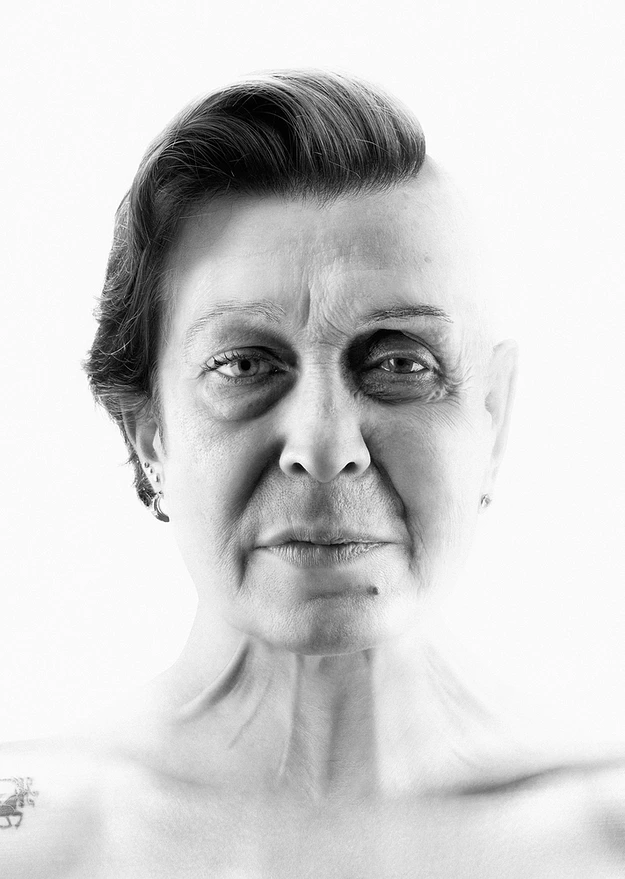
My exhibition Virtual Bodies set out to question the place of the body and the individual in consumer society. In this society, the body has taken the place of the soul, surrounded by the myths of health, diet, therapy and desire. Mass media continually invite us to rediscover our bodies, even as they turn them into objects of investment.
The model in a women's magazine, for example, has the same temperature as a piece of modern furniture: the temperature of an ambience. This new sexuality plays on hot and cold in the same way that warm and cool colours are arranged in a functional interior. Eroticism resides not in desire itself, but in its signs. Sexuality is no longer confined to sexuality; it circulates through media, cinema and literature. Similarly, politics is no longer confined to politics, but extends into religion, art, philosophy and science. Football becomes a little political; art takes on the character of celebrity culture, and celebrity culture borrows from art.
The real becomes entangled with its copies, and reality with appearances. Day by day, our lives move further into simulation. Society increasingly consists of similar individuals who speak, think and dress as people do on television, while the individual searching for meaning in their own existence recedes from view. We might call this an era of transparency: an age in which everything becomes mixed with everything else, anything can become anything, and anyone can say or do anything.
Politics is shaped by opinion research, advertising by testing, and radio playlists by consumer panels. Film endings and posters are determined by polls; television programmes by ratings. My work seeks to reveal this reversal and the way the system's categories cross into and dissolve in one another. It addresses the despair and fragmentation of individuals subjected to continual sexual, political and religious manipulation.
Well-being delivered through an intravenous drip, controlled anaesthesia, cloned expressions and lives: the figures seem to drift in a state resembling sleep, wearing the happiness circulated around them like a mask. They are transformed into virtual bodies and artificial, androgynous identities that no longer offer anything to desire. Cloned bodies and heads find form in other individuals. This irony is an artistic critique of the cultural and mental cloning through which we are transformed into similar copies of one another.
Ali Alışır
2009