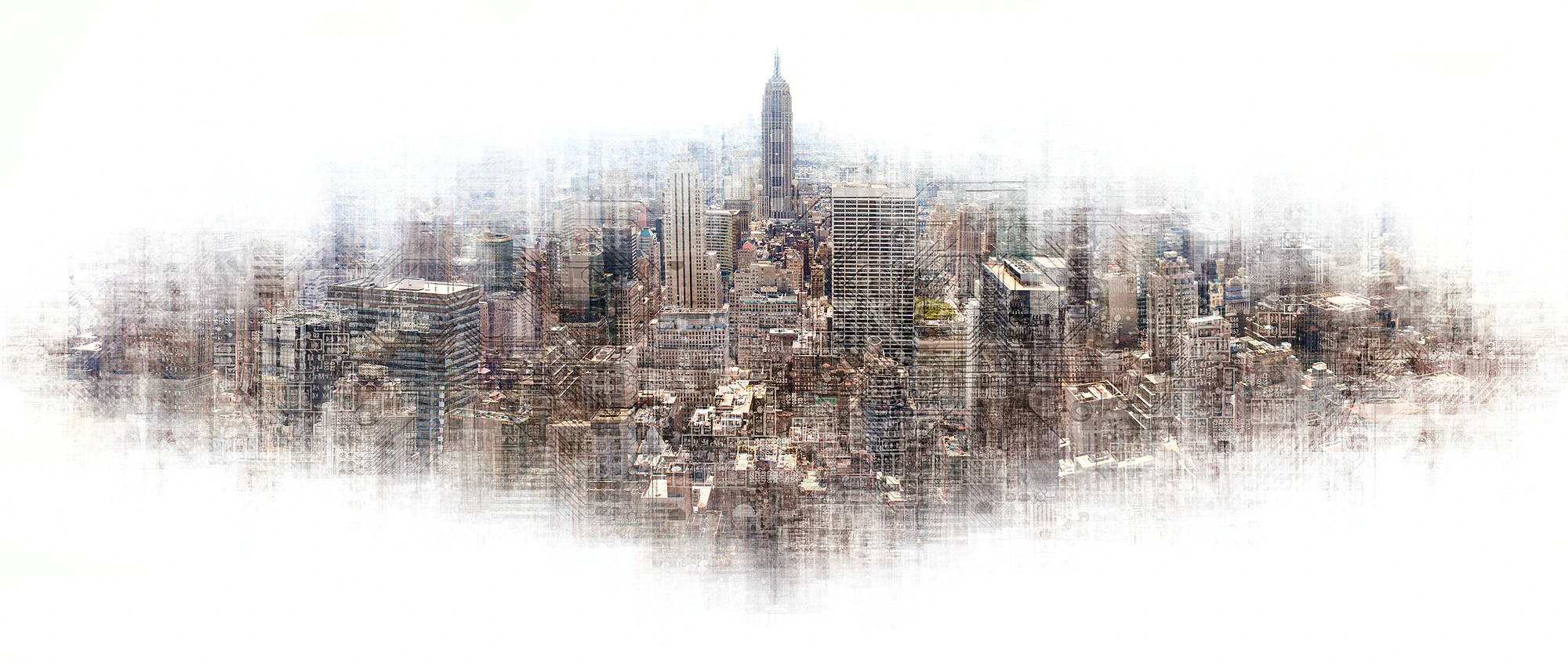
Although we stand only at the threshold of a new technological enlightenment, technological developments are already radically changing the way we think. The technology of our age is stripping away layers accumulated over millennia and revealing an entirely new universe beneath them. This seemingly unlimited freedom takes the form of virtual reality, whose reach expands each day. Just as the telephone succeeded the telegraph and television followed radio, virtual reality spreads through our surroundings like a virus. Its contemporary meaning has moved far beyond the optical notion of a virtual image. Images no longer merely reflect the world before our eyes; they shape our lives, social environments, relationships and, ultimately, ourselves. Through virtual reality, our thoughts, perceptions and experiences gradually enter a state of transparency. We have become both the viewers and the communication network itself.
As technology accelerates, photography has increasingly come to resemble virtual reality, as though its reality had been absorbed and swallowed by these virtual networks. The digital encoding of photographs, and their transfer from one processor to another—from computers to televisions and mobile phones—have altered the nature of the photographic image. Reality is no longer as clear and self-evident as we once imagined. Digital encoding, repeated recoding and overwriting turn the photograph into a synthetic image.
These processes of encoding have also transformed the content and circulation of news. On television, events become representations of events: what is transmitted is their digital code, their ones and zeros. Through mass communication, reality is artificially reproduced. The economy and politics share in this dissolution. The real economy gives way to a virtual economy, while a new media order takes the place of politics.
Policies are shaped by public opinion surveys, and advertisements are developed through testing. Consumer panels decide which songs are played on the radio. Film endings and poster designs are formulated according to opinion polls, while ratings determine television programming. Perhaps the most significant change is that the control, production and distribution of images have been entrusted to digital processors, artificial memory and technological communication devices.
The rapid transformation of images and information has driven a shift from newspapers, magazines and books to digital platforms. This change of medium represents a transformation on the scale of the invention of the printing press. During this long passage, information has moved away from the realm of the real towards the realm of the possible, leaving the domain of the event for the domain of thought. As information moves from a limited field into an unlimited one, it enters a virtual environment.
To be virtual is to hold the possibility of becoming something else: in one sense, the potential to embody all the qualities of reality. Every piece of information in circulation is changed by other information within the network. Computer-generated virtual images increasingly approach a point at which they define reality in their own terms.
The Virtual Places project offers an artistic interpretation of the break between medieval reverse perspective and the central perspective of the Renaissance. In the places where we live, socialise and trade, we can no longer perceive a stable depth or point of rupture. In place of the gloomy, oppressive buildings that once surrounded us, we encounter the operations of interfaces and representations of networks. The spaces in which we connect through electronic circuits—mobile phones and the internet—or navigate an unlimited information network have become weightless, interactive fields that elude conventional rules of measurement. Information and images constantly change places within them, open to endless reproduction and intervention. Virtual Places is an artistic critique of the effects of these technologies on individuals who are becoming mentally estranged from their physical surroundings.
Ali Alışır
2011